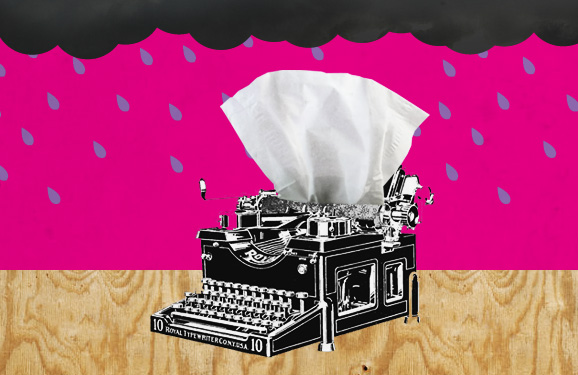
 “It turns out that ‘low-intensity’ negative moods are linked to better writing than happy moods. As shown in the research of University of New South Wales Psychology Professor Joe Forgas, when we’re not walking on clouds or doing a happy dance, we tend to be more careful and mindful of details.
“Forgas has worked extensively on the effects of mood, and his most in-depth work with writing was described in the 2006 article ‘When sad is better than happy: Negative affect can improve the quality and effectiveness of persuasive messages and social influence strategies.’ . . .
“So why do crappy moods have such un-crappy consequences? Forgas said, ‘The most likely explanation is based on evolutionary theorising—affective states serve an adaptive purpose, subconsciously alerting us to apply the most useful information processing strategy to the task at hand. A negative mood is like an alarm signal, indicating that the situation is problematic, and requires more attentive, careful and vigilant processing—hence the greater attention to concrete information.'” (more @ GOOD)


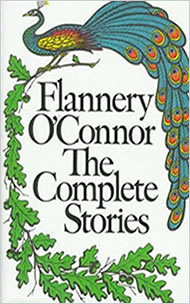



 “Old books smell like grass, with a tang of acidity and a hint of vanilla, according to scientists who have discovered a way to tell the condition of an [sic] works by their odour.
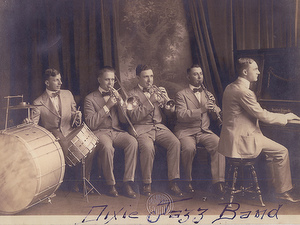 “Long before we debated what real punk-rock was, what true hip-hop was, or what made indie-rock authentic, jazz heads grappled with what is and isn’t jazz music. Now, the debate is whether jazz is dying off or not.
 “The mystery surrounding bluesman
  “If you’re a fan of the
  “Ever wonder how people really talked in the 1800s, or 1500s, or earlier?
 “The questions before the judges in Courtroom No. 1 of Britain’s Supreme Court were as ancient and as complex as Judaism itself.


 The 'Not-So-Rough' Guide