Feeds:
Posts
Comments

Archive for the ‘Books’ Category

“Short, lucid writing is needed in these uncertain times, according to the Booker prize-winning Nigerian author Ben Okri, who is releasing a new poem line by line on Twitter. . . .

“‘I sing a new freedom,’ Okri Twittered yesterday, following it up today with the second line of the poem, ‘Freedom with discipline’, today. The poem was written to mark the release of Okri’s new book, Tales of Freedom, in April. The book brings together short stories and poetry in what Okri’s publisher described as ‘a fascinating new form, using writing and image pared down to their essentials, where haiku and story meet’. The entire poem will be posted on Okri’s Facebook and MySpace pages once it is completed.” (more @ The Guardian)

Read Full Post »

hemingwayhopkinsAnthony Hopkins will play Ernest Hemingway in an indie titled Hemingway & Fuentes, to be produced and directed by Andy Garcia. . . .

“Garcia, who also co-wrote the script with Hemingway’s niece, author Hilary Hemingway, will costar in the film as well, playing the real life fishing-boat captain Gregorio Fuentes, who befriended Papa Hemingway in the last decade of the alpha-male writer’s life. Fuentes was said to be the model for one of Hemingway’s most enduring literary creations: the grizzled fisherman Santiago in The Old Man and the Sea, which won the Pulitzer Prize in 1952.” (more @ Entertainment Weekly; via Books, Inq.)

Read Full Post »

“Sana Krasikov is the 2009 recipient of the $100,000 Sami Rohr Prize for Jewish Literature for emerging writers of Jewish literature. Krasikov wins the Prize for her debut short story collection, One More Year (Spiegel & Grau) . . . 

“The Sami Rohr Prize is the largest monetary prize of its kind in the Jewish literary world, and one of the largest literary prizes worldwide. In 2006, in celebration of Sami Rohr’s 80th birthday, his children and grandchildren inaugurated the Sami Rohr Prize to honor his lifelong love of Jewish literature. The Prize considers fiction and non-fiction in alternating years.” (more @ Jewish Book Council)

Read Full Post »

“On the eve of national strikes, the French have found a new way to show their dislike of [President] Nicolas Sarkozy: by reading a 17th century tale of thwarted love that the president has said he hates.

“Mr Sarkozy, a man often ridiculed in France for preferring fitness to literature, has frequently expressed his disdain for ‘La Princesse de Cleves (The Princess of Cleves), a novel by Madame de La Fayette which was published in 1678 and is taught in most French classrooms.

“Now, French readers have adopted the book as a symbol of dissent: as Mr Sarkozy’s popularity falls, sales of the book are rising.

“At the Paris book fair this week, publishers reported selling all available copies of the novel, while badges emblazoned with the slogan ‘I am reading La Princesse de Cleves’ were a must-have item that sold out within hours. . . .

“Public readings of the work have proliferated at universities like the Sorbonne in Paris, hit by protests over government reform plans, and at theatres.” (more @ Daily Telegraph UK)

Related

Read Full Post »

“There’s now a rumored-price tag on George W. Bush‘s forthcoming memoirs, ‘Decision Points:’ a $7 million advance from publisher Crown. How does that stack up to other Deciders?

“It’s $5 million less than Bill Clinton‘s advance for My Life$1 million less than Hillary Clinton got for Living History, and $2 million less than the advance for the memoirs of Tony Friggin’ Blair, the British prime minister who answered to some queen, and to George W. Bush. BURN.” (via Gawker)

Related

Read Full Post »

bookerprize“The Man Booker International Prize was announced in June 2004 and recognises one writer for his or her achievement in fiction. Worth £60,000 to the winner, the prize is awarded once every two years to a living author who has published fiction either originally in English or whose work is generally available in translation in the English language. In addition, there is a separate prize for translation and, if applicable, the winner can choose a translator of his or her work into English to receive a prize of £15,000. . . .

“The Man Booker International Prize differs from the annual Man Booker Prize for Fiction in that it highlights one writer’s continued creativity, development and overall contribution to fiction on the world stage.  Both prizes strive to recognise and reward the finest fiction.”

The 14 authors on the 2009 contenders list are:

Previous winners of the prize are Ismail Kadare of Albania and Nigerian author Chinua Achebe. (more @ Man Booker Prizes)

Read Full Post »

wizardofozWas Dorothy in Frank Baum’s 1900 children’s novel The Wonderful Wizard of Oz a Populist “Everyman” who — with William Jennings Bryan (Lion), a farmer (Scarecrow) and an industrial worker (Tin Woodman) — went off to see the Wizard (President) to voice support for the use of silver as currency? Or, more critically, as economists today “fear an onset of deflation, and economic certainties melt away like a drenched wicked witch,” are there lessons to be learned from Oz?

“In 1964, high school teacher Henry Littlefield wrote an article outlining the notion of an underlying allegory in Frank Baum’s book. He said it offered a ‘gentle and friendly’ critique of Populist thinking, and the story could be used to illuminate the late 19th Century to students. . . .

“[Littlefield] believed the characters could represent the personalities and themes of the late 1800s, with Dorothy embodying the everyman American spirit.

“US political historian Quentin Taylor, who supports this interpretation, says: ‘There are too many instances of parallels with the political events of the time.’ . . .

“But not everyone believes The Wonderful Wizard of Oz includes any hidden meanings.

“‘Nobody ever suggested it until 1964,’ says Bradley Hansen, who is a professor of economics at the University of Mary Washington. ‘There’s no solid evidence that Baum had written it as a monetary allegory,’ he adds.”

As for the value of Baum’s book to present-day economists, Taylor agrees that despite the references to late 19th-century economic issues, “little can be learnt from Baum about the modern economic crisis.” (more @ BBC News)

RelatedSarah Palin As Dorothy? We’re Not In Kansas …

Read Full Post »

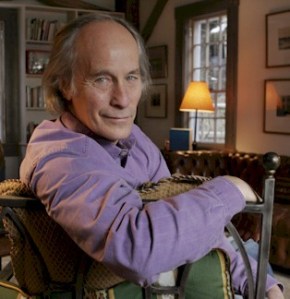
richard-fordIn the current issue of Bookforum, novelist Richard Ford considers whether Frank Bascombe, the narrator of his award-winning trilogy of novels, is “a stand-in for the rest of us”:

“Over the last twenty years, goodwilled readers have occasionally asked me if Frank Bascombe, the yearning, sometimes vexatious, narrator of my three novels The SportswriterIndependence Day, and Lay of the Land—if Frank Bascombe was intended to be an American ‘everyman.’ By this I think these readers mean: Is Frank at least partly an emblem? Poised there in the final clattering quadrant of the last century, beset with dilemmas and joys, equipped with his suburban New Jersey skill set and ethical outlook—do Frank’s fears, dedications, devilings, and amusements stand somewhat for our own?

“Naturally, I’m flattered to hear such a question, since it might mean the questioner has read at least one of these books and tried to make use of it. And I can certainly imagine that a millennial standard-bearer might be worth having; a sort of generalizable, meditative, desktop embodiment of our otherwise unapplauded selves—one who’s not so accurately drawn as to cause discomfort, but still recognizable enough to make us feel a bit more visible to ourselves, possibly recertify us as persuasive characters in our own daily dramas.

“But the truth is that Frank Bascombe as ‘everyman’ was never my intention. Not only would I have no idea how to go about writing such a full-service literary incarnation, but I’m also sure I’d find the whole business to be not much fun in the doing. And I still want to enjoy what I’m doing.” (more @ Bookforum)

Read Full Post »

“More than 9,000 books are missing from the British Library, including Renaissance treatises on theology and alchemy, a medieval text on astronomy, first editions of 19th- and 20th-century novels, and a luxury edition of Mein Kampf produced in 1939 to celebrate Hitler’s 50th birthday.

“The library believes almost all have not been stolen but rather mislaid among its 650km of shelves and 150m items – although some have not been seen in well over half a century. . . .

“The library records all of these items as ‘mislaid’ rather than gone for ever, still less stolen. Despite well-publicised recent cases – such as that of Edward Forbes Smiley III, convicted in the US three years ago of stealing more than 100 maps from institutions including the British Library, and Farhad Hakimzadeh, an Iranian collector jailed in January for cutting maps, illustrations and pages from priceless volumes in the British Library and other collections – the library is convinced that almost all the missing texts are still somewhere within its walls.” (more @ The Guardian)

Read Full Post »

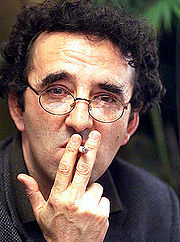
bolanoawardThe awards keep rolling in for the late Roberto Bolaño and 2666:

“On Thursday, March 12, 2009, at a crowded ceremony at the New School in New York, the National Book Critics Circle announced the winners of its book awards, covering books published in 2008. . . .

“Roberto Bolaño’s monumental 2666 (Farrar, Straus), a tale of love and violence set within the framework of the fictional town of Santa Teresa, Mexico, that’s widely regarded as the late author’s masterpiece, won the fiction award. Fiction committee chair Marcela Valdes called the work ‘a virtuoso accomplishment that ranks with Moby-Dick and Blood Meridian as one of the trenchant and kaleidoscopic examinations of evil in fiction.'”

Other winners included:

  • Poetry (co-winners): August Kleinzahler, Sleeping It Off in Rapid CityJuan Felipe Herrera, Half the World in Light
  • CriticismSeth LererChildren’s Literature: A Reader’s History from Aesop to Harry Potter
  • BiographyPatrick French, The World Is What It Is: The Authorized Biography of V.S. Naipaul
  • AutobiographyAriel Sabar, My Father’s Paradise: A Son’s Search for His Jewish Past in Kurdish Iraq
  • NonfictionDexter Filkins, The Forever War.

(more @ National Book Critics Circle)

RelatedMas Bolano: Part VI of “2666” Discovered in Author’s Papers

Read Full Post »

purdy2James Purdy, whose dark, often savagely comic fiction evoked a psychic American landscape of deluded innocence, sexual obsession, violence and isolation, died Friday in Englewood, N.J. He was 94 and lived in Brooklyn Heights. . . .

“Wayward and unclassifiable, Mr. Purdy, the author of the novels ‘Malcolm’ and ‘The Nephew,’ labored at the margins of the literary mainstream, inspiring veneration or disdain. His nearly 20 novels and numerous short stories and plays either enchanted or baffled critics with their gothic treatment of small-town innocents adrift in a corrupt and meaningless world, his distinctive blend of plain speech with ornate, florid locutions, and the hallucinatory quality of his often degraded scenes. . . .

“If Mr. Purdy made limited headway against what he called, in an autobiographical sketch, ‘the anesthetic, hypocritical, preppy and stagnant New York literary establishment,’ he was proclaimed ‘an authentic American genius’ by Gore Vidal and admired extravagantly by writers like Angus Wilson, John Cowper Powys and Edith Sitwell, who, reviewing the stories and short plays collected in ‘Children Is All’ (1962), wrote that Mr. Purdy would ‘come to be recognized as one of the greatest living writers of fiction in our language.’ (more @ NY Times)

RelatedWho is James Purdy? Edward Albee Tells

Read Full Post »

DubaiPoetry“The words of the late Palestinian poet and author Mahmoud Darwish echoed in a packed hall yesterday at the launch of the first annual Dubai International Poetry Festival.

“The festival was inaugurated by Sheikh Mohammed bin Rashid, Vice President of the UAE and Ruler of Dubai, in the presence of more than 100 regional and international poets and writers from 45 countries.

“Jamal Khalfan bin Huwaireb, head of the festival’s organising committee, said in his keynote address that the aim of the festival was to create an opportunity for poets from around the globe to meet. . . .

“‘Poetry is among the most evolved of the arts and the strongest bridge between cultures. We believe that poetry can correct what politics has damaged,’ said Mr bin Huwaireb.” (more @ The National)

Related

Read Full Post »

kerouacradioJack Kerouac, author of “On the Road” and progenitor of the Beat Generation as well as subsequent generations of literary dreamers, was born on this date in 1922 in Lowell, Massachusetts. He died in 1969 at age 47.

Gilbert Millstein’s 1957 New York Times review of “On the Road,” which Dwight Garner called “probably the most famous book review in the history of [the] newspaper,” can be found here.

The following excerpt from “On the Road” describes Sal Paradise’s (Kerouac’s) first attempt at traveling west alone:

I’d been poring over maps of the United States in Paterson for months, even reading books about the pioneers and savoring names like Platte and Cimarron and so on, and on the road-map was one long red line called Route 6 that led from the tip of Cape Cod clear to Ely, Nevada, and there dipped down to Los Angeles. I’ll just stay on all the way to Ely, I said to myself and confidently started. To get to 6 I had to go up to Bear Mountain. Filled with dreams of what I’d do in Chicago, in Denver, and then finally in San Fran, I took the Seventh Avenue Subway to the end of the line at 242nd Street, and there took a trolley into Yonkers; in downtown Yonkers I transferred to an outgoing trolley and went to the city limits on the east bank of the Hudson River. If you drop a rose in the Hudson River at its mysterious source in the Adirondacks, think of all the places it journeys as it goes to sea forever — think of that wonderful Hudson Valley. I started hitching up the thing. Five scattered rides took me to the desired Bear Mountain Bridge, where Route 6 arched in from New England. It began to rain in torrents when I was let off there. It was mountainous. Route 6 came over the river, wound around a traffic circle, and disappeared into the wilderness. Not only was there no traffic but the rain come down in buckets and I had no shelter. I had to run under some pines to take cover; this did no good; I began crying and swearing and socking myself on the head for being such a damn fool. I was forty miles north of New York; all the way up I’d been worried about the fact that on this, my big opening day, I was only moving north instead of the so-longed for west. Now I was stuck on my northermost hangup. I ran a quarter-mile to an abandoned cute English-style filling station and stood under the dripping eaves. High up over my head the great hairy Bear Mountain sent down thunderclaps that put the fear of God in me. All I could see were smoky trees and dismal wilderness rising to the skies. “What the hell am I doing up here?” I cursed, I cried for Chicago. “Even now they’re all having a big time, they’re doing this, I’m not there, when will I get there!” — and so on. Finally a car stopped at the empty filling station; the man and the two women in it wanted to study a map. I stepped right up and gestured in the rain; they consulted; I looked like a maniac, of course, with my hair all wet, my shoes sopping. My shoes, damn fool that I am, were Mexican huaraches, plantlike sieves not fit for the rainly night of America and the raw road night. But the people let me in and rode me back to Newburgh, which I accepted as a better alternative than being trapped in the Bear Mountain wilderness all night. “Besides,” said the man, “there’s no traffic passes through 6. If you want to go to Chicago you’d be better going across the Holland Tunnel in New York and head for Pittsburth,” and I knew he was right. It was my dream that screwed up, the stupid hearthside idea that it would be wonderful to follow one great red line across America instead of trying various roads and routes.

In Newburgh it had stopped raining. I walked down to the river and I had to ride back to New York in a bus with a delegation of schoolteachers coming back from a weekend in the mountains — chatter chatter blah-blah, and me swearing for all the time and money I’d wasted, and telling myself, I wanted to go west and here I’d been all day and into the night going up and down, north and south, like something that can’t get started. (via Literary Kicks)

Kerouac’s explanation of his “spontaneous prose” writing method can be found here.

Video and audio clips from Kerouac readings, as well as rare tapes of Kerouac and Neal Cassady, can be found here. More can be found here and here and here.

A video documentary, Jack Kerouac – King of the Beats, can be viewed here.

Related

Read Full Post »

basketballComing Soon – the WORD Basketball League!

WORD Books in Greenpoint, Brooklyn, is setting up a summer basketball league for book lovers. The league will welcome men and women and will likely play its games on the playground courts across the street from the store.

To prove their league-readiness, applicants need not demonstrate their shooting or dribbling skills – instead, book-loving hoopster-hopefuls need to answer the following five questions:

1. Who wrote Ulysses?
2. What is the best selling book of all time?
3. What is J. D. Salinger’s most well-known book?
4. Name a book that has been banned in the United States in the last 100 years.
5. What is your favorite book?

Those who don’t score well (on the test) are invited to cheerlead.

Read Full Post »

niffenegger“Six years after the publication of her blockbuster best-selling novel, ‘The Time Traveler’s Wife,’ Audrey Niffenegger has sold a new manuscript for close to $5 million, according to people with knowledge of the negotiations. It is an especially significant sum at a time of retrenchment and economic uncertainty in the publishing world.

“After a fiercely contested auction, Scribner, a unit of Simon & Schuster, bought the rights to publish the new novel, ‘Her Fearful Symmetry,’ in the United States this fall. The book is a supernatural story about twins who inherit an apartment near a London cemetery and become embroiled in the lives of the building’s other residents and the ghost of their aunt, who left them the flat. . . .

“‘Her Fearful Symmetry’ is set to go on sale at the end of September, and will coincide with the British publication by Jonathan Cape this fall. The film adaptation of ‘The Time Traveler’s Wife,’ directed by Robert Schwentke and starring Rachel McAdams and Eric Bana, is scheduled for a February release.” (more @ NY Times)

RelatedCape confirms Niffenegger deal

Read Full Post »

bolanosmall“Two new novels by the Chilean author Roberto Bolaño have reportedly been found in Spain among papers he left behind after his death. The previously unseen manuscripts were entitled Diorama and The Troubles of the Real Police Officer, reported La Vanguardia.

“The newspaper said the documents also included what is believed to be a sixth section of Bolaño’s epic five-part novel 2666. . . .

“It follows the discovery of another novel, entitled The Third Reich, which was shown to publishers at the Frankfurt book fair in October. . . .

“The writer, who spent the last part of his life in the Costa Brava region of Spain, died at the age of 50 in 2003.

“Uncompromising in his style and critical of authors who sold out to the market, he did not publish a novel until he was 43. He supported himself by, among other things, working as a security guard at a campsite and selling cheap jewellery to tourists visiting the Costa Brava. . . .

“Bolaño published his first novel in 1993 and posthumously grew in popularity after 2666 was translated into English and was one of the New York Times‘s top 10 books of 2008. His novel The Savage Detectives appeared on the same list the previous year.” (more @ The Guardian)

Related

UpdateChilean Bolano Posthumously Wins Book Critics Circle Award

Read Full Post »

306abboxlibraryBrooklyn, New York perfume merchant CB I Hate Perfume has just introduced “In the Library,” “a perfume inspired by the proprietor Christopher Brosius’s love of books and his inability to pass a secondhand bookshop without stopping in.

“According to the shop’s description, the perfume is supposed to evoke a first-edition English novel via ‘Russian and Moroccan leather bindings, worn cloth, and a hint of wood polish.'” (more @ The Book Bench)

[Makes me want to curl up with a good book . . . or a woman who smells like a good book!]

Read Full Post »

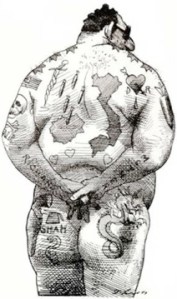
kissingercartoon“The Kissinger image [left] (by David Levine) is one of 320 illustrations – by 142 of the world’s most acclaimed contemporary artists – that The New York Times itself originally commissioned for its Op-Ed Pages, but then got cold feet about running, and eventually paid more than $1 million in ‘kill fees’ to hide from public view (sometimes for as long as 38 years).

“What didn’t the Times want you to see?

“Can you imagine illustrations so ‘blasphemous,’ so ‘politically embarrassing,’ so sexually ‘over the line’ that The New York Times gladly paid a fortune just to protect your delicate eyes from being exposed to them?

“You’ll find hundreds of such allegedly ‘not-fit-to-print’ illustrations – together with the bizarre and often ludicrous reasons for suppressing them – in a sly and deliciously funny new book called All The Art That’s Fit to Print (And Some That Wasn’t), by Jerelle Kraus, former Art Editor of the Times Op-Ed and Editorial Pages, who reluctantly quit her ‘dream job’ at the Times after 13 years in order to publish it. . . .

“Unfortunately, if you’re looking for more information about this book — don’t expect to consult a review in The New York Times. You won’t find one. For years the Times tried to discourage Ms Kraus from publishing this book, but now that it’s out, the Times is spitefully refusing even to acknowledge its existence, let alone actually review it. Since the Times‘ Book Section is a bible of the publishing world, not being noticed in its pages can often destroy a book’s chances of attracting a large audience.

“Which may be the the Times’s purpose — a publicity blackout might make the book quietly disappear.” (more @ AlterNet)

[Then there’s the New York Post, which had no problem running the Obama-as-stimulus-writing-monkey cartoon just last month. Seems to me both papers need to redraw their standards.]

Read Full Post »

shakespearebooksIn The Guardian, Jeanette Winterson, after a recent visit, recounts a bit of the history of Shakespeare and Company, Paris’ renowned Left Bank bookstore, first opened in 1913 and since 1962 owned by George Whitman. No visit to Paris is complete without a visit to this venerable literary institution which always recalls for me New York’s recently closed literary landmark, Gotham Book Mart 

“Way back, in 1913, the original Shakespeare and Company was opened by a young American called Sylvia Beach. Her shop in rue de l’Odéon soon became the place for all the English-speaking writers in Paris. Her lover, Adrienne Monnier, owned the French bookstore across the road, and she and Beach ran back and forth, finding penniless writers a place to stay, lending them books, arranging loans, taking their mail, sending their work to small magazines and, most spectacularly, publishing James Joyce’s Ulysses in 1922 when no one else would touch it.

“Hemingway was a regular at the shop, and writes about it in his memoir A Moveable Feast. . . . It was Hemingway, as a major in the US army, who at the liberation of Paris in 1945 drove his tank straight to the shuttered Shakespeare and Company and personally liberated Sylvia Beach. ‘No one that I ever knew was nicer to me,’ he said later, rich, famous and with a Nobel prize.

“But after the war, Beach was older and tired. She didn’t reopen the shop that had been forced into closure by the occupation. It was George Whitman who took over the spirit of what she had made, but not the name – until 1962, when Beach attended a reading by Lawrence Durrell at the bookstore and they all agreed that it should be renamed Shakespeare and Company.

“George took in the beat poets Allen Ginsberg and Gregory Corso. Henry Miller ate from the stewpot, but was too grand to sleep in the tiny writers’ room. Anaïs Nin left her will under George’s bed. There are signed photos from Rudolf Nureyev and Jackie Kennedy, signed copies of Jack Kerouac and William Burroughs.” (via Books, Inq.)

A New York Times article offering a brief history of Gotham Book Mart can be found here:

PHOTO: A December 1948 party at for Osbert and Edith Sitwell (seated, center) drew a roomful of bright lights to the Gotham Book Mart: clockwise from W. H. Auden, on the ladder at top right, were Elizabeth Bishop, Marianne Moore, Delmore Schwartz, Randall Jarrell, Charles Henri Ford (cross-legged, on the floor), William Rose Benét, Stephen Spender, Marya Zaturenska, Horace Gregory, Tennessee Williams, Richard Eberhart, Gore Vidal and José Garcia Villa. (Photo: Gotham Book Mart)

RelatedThe Gotham Book Mart’s Final Chapter?

Read Full Post »

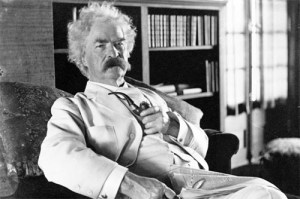
marktwain“Almost 99 years after his death on April 21, 1910, Mark Twain will publish a new short story next week in the pages of the quarterly mystery magazine the Strand.

“Discovered in Twain’s archive — reportedly the largest collection of personal papers left behind by a 19th century American author — the never-before-published ‘The Undertaker’s Tale’ is a short tale-within-a-tale about a wretched homeless boy who is taken in by a kindly undertaker’s family. . . .

“‘The Undertaker’s Story’ will be part of a new book, ‘Who Is Mark Twain?,’ that is due out next month. It’s the first collection of his unpublished short works and will include 24 stories and essays.” (via LA Times)

Read Full Post »

« Newer Posts - Older Posts »