Feeds:
Posts
Comments

Archive for the ‘Books’ Category

books“In Woody Allen’s clever 1983 mockumentary ‘Zelig,’ the title character lies about having read ‘Moby-Dick’ so he can fit in with the crowd – kicking off a career as a face-changing human chameleon.

“Turns out there are a lot of Zeligs around: a recent survey found that more than two-thirds of respondents admitted to lying about having read classic books, with George Orwell’s ‘1984’ topping the fib list.

“The survey of more than 1,300 readers by the UK-based organizers of World Book Day, placed Leo Tolstoy’s ‘War and Peace’ and James Joyce’s ‘Ulysses’ at Nos. 2 and 3 of the book that inspired the most lies.

“Breaking at least one commandment, 24 percent of those surveyed said they had lied about reading The Bible, which placed No 4. People didn’t only pretend to read old-time tomes: President Obama’s ‘Dreams from My Father’ made the list, at No. 9.” (more @ NBC New York)

Read Full Post »

colognes-historical-archi-001

“For the best part of a decade, the heirs of German writer and Nobel prize laureate Heinrich Böll worked on hammering out a deal with the city of Cologne over the transfer of his private papers to the state archives.

“Three weeks ago, city officials held a special ceremony to mark the historic handover: for €800,000 (£712,000), the Cologne archives took possession of hundreds of boxes containing items ranging from Böll’s school reports to scripts of his radio plays, novels and essays by Germany’s most popular post-second world war writer, who died in 1985 at the age of 67.

“But his papers and unpublished works may have been lost for ever after the collapse of the archives building this week. . . .

“The Böll documents are just a small part of the losses to the archives which contained almost 30km of files, including articles written by Karl Marx, letters by Georg Hegel, writings by composer Jacques Offenbach and edicts issued by Napoleon Bonaparte, as well as the minutes of city council meetings going back to 1376, which offer a fascinating portrait of medieval Cologne.” (more @ The Guardian)

A video of the post collapse excavations can be viewed here. (via Books, Inq.)

Read Full Post »

mcewanFrom Daniel Zalewski’s admiring essay on Ian McEwan, “England’s national author”:

“McEwan is a connoisseur of dread, performing the literary equivalent of turning on the tub faucet and leaving the room; the flood is foreseeable, but it still shocks when the water rushes over the edge. That’s how it is with the hounds that descend upon a woman in the 1992 novel ‘Black Dogs’; the orgiastic murder in the 1981 novel ‘The Comfort of Strangers’; the botched sexual initiation in ‘On Chesil Beach.’ At moments of peak intensity, McEwan slows time down—a form of torture that readers enjoy despite themselves. In ‘The Child in Time,’ from 1987, a man’s little girl is kidnapped at the supermarket, and his rising panic is charted with the merciless precision of a cardiogram. In ‘The Innocent,’ a 1990 tale of espionage in postwar Berlin, McEwan spends eight pages conjuring a corpse’s dismemberment. And ‘Saturday’ keeps the reader jangled for nearly forty pages, wondering along with Perowne if an airplane descending on London has become a terrorist missile. Martin Amis says, ‘Ian’s terribly good at stressed states. There’s a bit of Conrad that reminds me of Ian. It’s ‘Typhoon,’ when the captain is heading into this terrible storm and Conrad is in the position of first mate. Going into the captain’s cabin, he notices that the ship is yawing so that the captain’s shoes are rolling this way and that across the floor, like two puppies playing with each other. You think, Wow, to keep your eyes open when most people would be closing theirs. Ian has that. He’s unflinching.’

“Page-turning excitement has long been a suspect virtue in a literary novel, and some critics have disparaged McEwan as a hack with elegant prose. He does lean on noirish tropes—the climaxes of ‘Enduring Love’ and ‘Saturday’ both involve a deranged man, a trembling woman, and a knife. But McEwan believes that something stirring should happen in a novel. Though he is animated by ideas, he would never plop two characters on a sofa and have them expound rival philosophies. The opening to ‘Enduring Love’ offers a crisp illustration of game theory: when a balloon becomes untethered, each of the five men holding a rope is forced to make a decision without knowing what the others will do. But most readers enjoy it as a thrilling set piece. On our walk, McEwan twice cited Henry James’s dictum that the only obligation of a novel ‘is that it be interesting.’ Later, McEwan declared that he finds ‘most novels incredibly boring. It’s amazing how the form endures. Not being boring is quite a challenge.'” (more @ The New Yorker)

RelatedJames Wood writes about the manipulations of Ian McEwan

[McEwan’s essay “On John Updike” in The New York Review of Books, in which he describes Updike as having been as “troubled by science as others are troubled by God,” can be found here.]

Read Full Post »

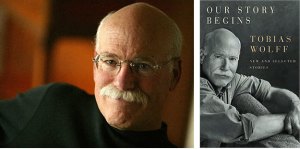
tobias_wolffOn Wednesday night, shortly after reading from his well-known story ‘Bullet in the Brain,’ Tobias Wolff was called back to the stage of the New School’s Tishman Auditorium to accept The Story Prize. The other two finalists were Jhumpa Lahiri’s best-selling Unaccustomed Earth (Knopf) and Joe Meno’s Demons in the Spring (Akashic Books). . . . The $20,000 award Wolff received, in addition to an engraved silver bowl, is the largest first-prize amount of any annual U.S. book award for fiction.” (via Reuters)

RelatedWhat Wolff knows

Read Full Post »

PD*5068633Edgar Allan Poe apologizes to his publishers for drinking too much and asks them to buy an article because he’s ‘desperately pushed for money’ in an 1842 letter acquired by the University of Virginia for an exhibition marking the author’s 200th birthday. . . .

“‘Will you be so kind enough to put the best possible interpretation upon my behaviour while in N-York?,’ Poe asks New York publishers J. and Henry G. Langley. ‘You must have conceived a queer idea of me — but the simple truth is that Wallace would insist upon the juleps, and I knew not what I was either doing or saying.’ . . .

“The U.Va. Library released the letter this week ahead of an exhibit opening Saturday that highlights Poe’s enduring literary works, brief life and mysterious death at the age of 40. Poe attended the Charlottesville university, but had to drop out after less than a year in part because of financial difficulties, which plagued him the rest of his life.” (via Associated Press)

Read Full Post »

kerouacJack Kerouac‘s ‘lost’ novel The Sea is My Brother, which he wrote during his years as a merchant seaman, is to be published in its entirety for the first time.

“Described by Kerouac as being about ‘man’s simple revolt from society as it is, with the inequalities, frustration, and self-inflicted agonies,’ the 158-page handwritten manuscript was Kerouac’s first novel, but was not published during his lifetime. He wrote in his notes for the project that the characters were ‘the vanishing American, the big free by, the American Indian, the last of the pioneers, the last of the hoboes.’

“The novel follows the fortunes of Wesley Martin, a man who Kerouac said ‘loved the sea with a strange, lonely love; the sea is his brother and sentences. He goes down.’ By contrast another sailor, Kerouac continued, ‘escapes society for the sea, but finds the sea a place of terrible loneliness.'” (via The Guardian)

Read Full Post »

oddmanout“Matt McCarthy, a graduate of Yale and of Harvard Medical School now working as an intern in the residency program at NewYork-Presbyterian/Columbia hospital in New York, has gained national attention in recent weeks for “Odd Man Out,” his salacious memoir of his summer as an obscure minor league pitcher. He writes about playing with racist, steroids-taking teammates, pitching for a profane, unbalanced manager and observing obscene behavior and speech that in some ways reinforce the popular image of wild professional ballplayers.

“But statistics from that season, transaction listings and interviews with his former teammates indicate that many portions of the book are incorrect, embellished or impossible. It comes during a difficult period for the publishing industry, which has recently had three major memoirs — James Frey’s infamous “A Million Little Pieces” and the recollections of a Holocaust survivor and of an inner-city foster child — exposed as mostly fabricated. The authors of those books have acknowledged their fraud.” (more @ NY Times)

Disputed passages from the book can be found here.

Related

Read Full Post »

Blagojevich MoneyGlenn Selig, a publicist for Rod Blagojevich, says the recently impeached former Illinois governor signed a six-figure deal on Monday to write a book “exposing the dark side of politics.” (via The Huffington Post)

Update: (3/9) BLAGOJEBOOK

Read Full Post »

david_foster_wallaceThe author David Foster Wallace, best known for his novel “Infinite Jest,” “a vast investigation into America as the land of addictions: to television, to drugs, to loneliness,” committed suicide on September 12, 2008 at the age of 46. Wallace, who suffered from depression for more than twenty years, struggled for more than a decade with his unfinished third novel, “The Pale King,” which he hoped would surpass “Infinite Jest.”

In the March 9th issue of The New Yorker, D.T. Max writes about Wallace’s twin struggles:

Although “depression,” writes Max, “often figured in his work,” Wallace “never published a word about his own mental illness.”

As to the public display of grief over Wallace’s death, it was “connected to a feeling that, for all his outpouring of words, he died with his work incomplete. Wallace, at least, never felt that he had hit his target. His goal had been to show readers how to live a fulfilled, meaningful life. ‘Fiction’s about what it is to be a fucking human being,’ he once said. Good writing should help readers to ‘become less alone inside.'”

“From 1997 on, Wallace worked on a third novel, which he never finished—the ‘Long Thing,’ as he referred to it . . . His drafts, which his wife found in their garage after his death, amount to several hundred thousand words, and tell of a group of employees at an Internal Revenue Service center in Illinois, and how they deal with the tediousness of their work.” (more @ The New Yorker

An excerpt from Wallace’s unfinished novel can be found here.

The partial manuscript will be published next year by Little, Brown.

RelatedFor David Foster Wallace’s survivors, a paper puzzle (via LA Times)

[In 1999, Amherst [College] magazine writer Stacey Schmeidel interviewed Wallace by mail. The feature-length Q & A, titled “Brief Interview With a Five Draft Man,” ran in the Spring 1999 issue of the magazine, and is reprinted here.]

Read Full Post »

PD*4001807“Rather than killing it off, modern technologies like email, social networking sites such as Facebook and online media players are helping poets reach new audiences.”

Signs of growth, by the numbers:

  • The number of entries for the Foyle Young Poets Award more than doubling from 2003 to 2008 to almost 12,000.
  • The number of pamphlets sent to the Poetry Book Society for publication rose from 37 to 90 between 2006 and 2008.
  • Websites like Poetry Archive, which enables people to listen to recordings of poets like TS Eliot and Allen Ginsberg reading their work, are now enjoying unprecedented success. Poetry Archive . . . now receives 135,000 visitors a month and a million page hits. (via Daily Telegraph)

Read Full Post »

orwell“The longlists for the 2009 Orwell Prize for Political Writing were announced today, and for the first time the award includes a category for bloggers. Along with the traditional Book and Journalism submissions, this year the judges received entries in the form of YouTube videos and Twitter tweets. From eighty-three entrants for the Blog Prize . . . the judges selected a choice twelve, mixing the professional with the amateur, the politically affiliated with the politically free-wheeling:

“Alix Mortimer’s ‘The People’s Republic of Mortimer’; Andrew Sparrow’s Guardian Politics Blog; Chekov’s ‘Three Thousand Versts of Loneliness’; Hopi Sen’s Blog from the back room; Iain Dale’s Diary; Jack Night’s ‘Night Jack’; Mark Easton’s BBC News blog, ‘Mark Easton’s UK’; Neil Robertson’ ‘The Bleeding Heart Show’; Oliver Kamm’s Times Online blog; Paul Mason’s ‘Idle Scrawl’; The Heresiarch’s Heresy Corner; and Tom Harris’s ‘And another thing…’.

“While the Books and Journalism prizes have taken as their mantra Orwell’s ambition to ‘make political writing into an art’, the Blog Prize has looked to the day-to-day reflections in Orwell’s diaries for its criteria.” (via Granta)

[The March 12, 2009 issue of The New York Review of Books includes Julian Barnes’s essay, “Such, Such Was Eric Blair,” on George Orwell’s political writings. On his blog today, Andrew Sullivan writes of Barnes’s essay: “I’ve read a lot of Orwell and almost as much about him. This essay captures his Britishness – and avoids hagiography – as well as any I’ve read.”]

Read Full Post »

lp-logo“Lonely Planet has imposed a pay freeze with immediate effect after announcing that 50 jobs have been cut. . . .

“The travel publisher, which employs 500 people worldwide has axed 10% of its staff. . . . [Acting CEO Stephen] Palmer said they had made some, ‘difficult decisions in response to the prolonged and deep economic downturn.’ He said, ‘no-one knows what the future holds or can make any guarantees, but this step is our best effort at protecting ourselves from further cuts.'” (via The Bookseller.com)

Read Full Post »

“Joseph O’Neill’s novel ‘Netherland’ was named the winner of the 2009 PEN/Faulkner Award for Fiction, the PEN/Faulkner Foundation said on Wednesday. The honor for ‘Netherland,’ about a Dutch-born equities analyst, his British wife and their son, who live in New York during the Sept. 11 attack and its aftermath, is something of a comeback for Mr. O’Neill. The novel, though widely praised, was shut out in the National Book Awards and the National Book Critics Circle awards.” (via NY Times)

Michiko Kakutani’s New York Times review of “Netherland” can be found here.

[In many ways “Netherland” is a book about sports — in this instance cricket — and national identity; but the novel also contains some of the finest descriptions of ethnic New York City found anywhere. Related20 Are Detained After Cricket Attack (3/4/09, via NY Times)]

Read Full Post »

“Every few years, someone counts up the titles covered in the New York Times Book Review and the short fiction published in the New Yorker, as well as the bylines and literary works reviewed in such highbrow journals as Harper’s and the New York Review of Books, and observes that the male names outnumber the female by about 2 to 1. This situation is lamentable, as everyone but a handful of embittered cranks seems to agree, but it’s not clear that anyone ever does anything about it. The bestseller lists, though less intellectually exalted, tend to break down more evenly along gender lines; between J.K. Rowling and Stephenie Meyer alone, the distaff side is more than holding its own in terms of revenue. But when it comes to respect, are women writers getting short shrift?” (more @ Salon)

Related

Read Full Post »

As an early user and fan of Amazon.com’s Kindle e-book reader, I’ve wanted for the longest time to post something about the device, but never more than now, now that the Kindle 2 has been released and reviewed in various forums. Finally, Jon Stewart to the rescue.

From last night’s The Daily Show, here is Stewart’s discussion about the Kindle 2 with Amazon.com founder and CEO Jeff Bezos.

Vodpod videos no longer available.


Laughter aside, Roy Blount Jr., president of the Authors Guild, argues that “authors have a right to a fair share of the value that audio adds to Kindle 2’s version of books.”

Update

Read Full Post »

From today’s New York Times, Allison Arieff on San Francisco bookseller, collector and architectural book publisher William Stout and the old-fashioned pleasures of hunting in the stacks:

“Stores like Stout’s (not to mention people like Stout!) are a rare breed these days: there are two floors bursting with over 200,000 books on everything from the sustainable houses of Australian architect Glenn Murcutt to Czech graphic designer Vitezslav Nezval’s ‘Alphabet’ from 1926 to the last sketchbook of Jackson Pollock to William Wegman’s whimsical ‘Dogs on Rocks.’ Some books are shelved in an orderly fashion, others are piled high, begging for the serendipity of accidental discovery. . . .

“I love the tangents an afternoon spent searching the Internet can generate: a search for this leads to a blog on that which might lead to a book I’d not heard of or a film I want to see. But I realize as well that it’s contributing to a sort of collective ADD that makes ambling through aisles of a place like Stout Books feel that much more special, requiring an altogether different commitment of time, care and attention.”

Related

Read Full Post »

googleUpdating my January 31st post, Google & the Future of Books: I received the following email today from Nancy Dolan at Kinsella Media, LLC, regarding the Google Book Search settlement –

“Thank you for your blog post about the Google Book Search settlement.  The process of notifying authors and publishers about the settlement has begun.  If you would like to update your readers with the court-approved Notice, which summarizes the settlement, important terms, claims process, and key dates, it is available at http://www.googlebooksettlement.com/notice.html.  Rightsholders may now claim their works at http://www.googlebooksettlement.com.”

Read Full Post »

typewriterAhead of their publication later this year of six new short story collections, Harper Perennial has kicked off promotion of its “2009: Summer of the Short Story” campaign by launching a new blog, Fifty-Two Stories.

As reported by Publishers Weekly, the publishing house announced “that each week in 2009 it is posting a new short story. Some are new stories from Harper Perennial’s original collections or from upcoming hardcovers; some are original contributions never before published anywhere; and some are backlist classics. . . .

“Harper Perennial’s editorial director, Cal Morgan, selects a new story each week and posts it Sunday night. In January, Fifty-Two Stories featured stories by Mary Gaitskill, Tony O’Neill, Simon Van Booy and Tom Piazza. Last week, it posted a previously unpublished story from Louise Erdrich’s new collection, The Red Convertible, which Harper published in January. This week there’s a story by Willa Cather from The Bohemian Girl, a forthcoming selection of Cather’s greatest short works. Future selections include works by Katherine Dunn, Jess Walter, Mark Twain and Dennis Cooper.”

Read Full Post »

pessl2Writing in The Virginia Quarterly Review, Jacob Silverman denounces the “lazy and shallow tactic” of discussing an author’s looks in a book review. He recalls the often overheated commentary about Marisha Pessl‘s dust jacket photo in her 2006 debut novel, Special Topics In Calamity Physics, and takes Janet Maslin to task for her February 15th New York Times review of Miriam Gershow’s The Local News.

[Related: “The dust jacket photo remains a crucial promotional device. In fact, says Antonia Hodgson, the editor-in-chief at the publisher Little, Brown, it’s more important than ever.” (more @ Looking the part, 4/10/09, The National)]

Read Full Post »

bookstore-sign1“Peter Olson, until recently the chairman and CEO of Random House, wrote in Publishers Weekly last month: ‘While 2008 ended on a disappointing and even discouraging note for many in the book industry, the outlook for the new year is even bleaker. One-time adjustments by retailers and underlying shifts in the structure of the book industry will make 2009 the worst year for publishing in decades.’” (via London Review of Books)

Related

Read Full Post »

« Newer Posts - Older Posts »