 “Willie Davis, who succeeded Duke Snider as the center fielder for the Los Angeles Dodgers and used his blazing speed to steal 20 or more bases 11 straight years, led the National League in triples twice and set a record of three stolen bases in a World Series game, was found dead on Tuesday at his home in Burbank, Calif. He was 69. . . .
“Frank McCourt, the owner of the Dodgers, said in a statement that Davis was ‘one of the most talented players ever to wear a Dodgers uniform.’ Davis played 14 seasons for the Dodgers, on teams that were almost immediately the stuff of legend. Among his teammates were Sandy Koufax, Don Drysdale and Maury Wills. His 31-game hitting streak in 1969 is still a team record. It was the longest streak in the majors since Dom DiMaggio’s 34 games in 1949 for the Boston Red Sox.
“Davis holds six other franchise records, including hits (2,091), extra-base hits (585), at-bats (7,495), runs (1,004), triples (110) and total bases (3,094).
“Davis lifetime batting average was .279, and he had a total of 398 stolen bases. He made it to the major leagues in 1960 and retired after the 1979 season.
“Over his career, he played more than 2,200 games in center field, was a two-time All-Star and a three-time Gold Glove winner for his defense. He won World Series rings in 1963 and 1965, stealing three bases in one inning in the 1965 Series.” (more @ NY Times)

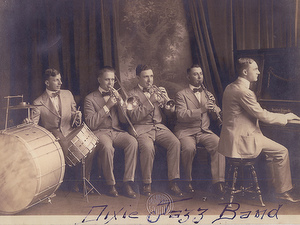 “Long before we debated what real punk-rock was, what true hip-hop was, or what made indie-rock authentic, jazz heads grappled with what is and isn’t jazz music. Now, the debate is whether jazz is dying off or not.
 “The mystery surrounding bluesman
 “Since the 1970s, as a collector, as a dealer, and as an auctioneer (one-half of the highly respected Sloate & Smolin Auctions and the sole owner of
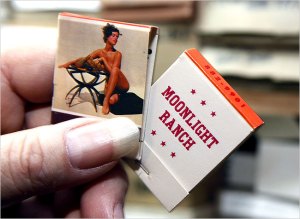 “If smoking was their sole raison d’être, restaurant matches should by all rights have disappeared by now. After being overtaken by the disposable lighter, they have run into smoking bans of varying severity. (Thirty-one states and the District of Columbia now have laws prohibiting smoking in restaurants, according to the American Lung Association, and local jurisdictions impose their own smoke-free rules.)
 “Yet matches appear to be struggling back from the brink to reassert their pre-eminence among the rabble of coasters, business cards, cocktail napkins and swizzle sticks charged with hawking a restaurant’s good name. In an era of instant information access and viral publicity, logo-bearing matches may have the edge as ambassadors that convey distinction in their very physicality.” (more @
 “Lucy O’Donnell, the woman who inspired the classic Beatles song
  “
“ “
“ “Gordon Waller, who formed half of
  “
“ “It took more than 30 years for the creators of Pez candy dispensers to give the little plastic figurines feet, and they never did get hands. But now the long arm of the
  “John Heneghan tugged a large shellac disc from its brown paper sleeve, placed it on a turntable and gently nudged a needle into place. Behind him, in the corner of his East Village apartment, sat 16 wooden crates, each filled with meticulously cataloged 78-r.p.m. records. The coarse, crackling voice of the blues singer Charley Patton, performing ‘High Water Everywhere Part 1,’ his startling account of the 1927 Mississippi River flood, rose from the speakers, raw and unruly. The record is worth about $8,000.
 “MOVIES about food used to make you want to eat. . . .
 “Slang is like a breeze; it softly comes and goes, as new times bring new buzzwords. Some stick (‘cool’ defiantly endures); some induce cringes when dusted off (‘groovy’ is now in the dustbin of irony). It’s obvious when slang becomes less funny or less meaningful through overuse: ‘Internets,’ for example, has become too widespread to be implicitly derisive of George W. Bush. Slang, in other words, is inevitably ephemeral–but it’s not always incidental. When hip-hop listeners crack the codes of songs en masse, rappers know it’s time to invent anew. The refusal of normative, dominant culture–beginning with the fundamentals of language–is embedded in the form. Baseball vernacular, for its part, isn’t so expressly political, nor is its obscurity as deliberate. Baseball belongs to the same class of folklore as, say, jazz, hamburgers and even hip-hop–but to employ Ken Burnsian hyperbole about the significance of its wordplay is a tough sell. It is what it is. As [Paul Dickson, author of
 The 'Not-So-Rough' Guide